GMC Lug Nut Torque Specs by Model (Chart)
The wheel nut torque for almost every modern GMC is 140 lb-ft (190 N·m). That single number covers the Sierra 1500, Sierra 2500HD and 3500HD (single and dual rear wheels), Yukon and Yukon XL, Acadia, Savana, Sierra EV, HUMMER EV, and the 2015-2026 Canyon. The exceptions are the Terrain, which is 100 lb-ft (140 N·m) from 2018 on and 125 lb-ft (170 N·m) for 2010 only, and the 2007-2012 Canyon at 100 lb-ft (140 N·m).
Every value below comes from the "Wheel Nut Torque" line in the Capacities and Specifications table of the GMC owner's manual for that model year, not from a parts catalog or a forum chart.
GMC Wheel Nut Torque Chart by Model and Year
| Model | Model years | Wheel nut torque | N·m |
|---|---|---|---|
| Sierra 1500 (including Denali, AT4, Limited) | 2007-2026 | 140 lb-ft | 190 |
| Sierra 2500HD / 3500HD, single rear wheel | 2007-2018, 2020-2026 | 140 lb-ft | 190 |
| Sierra 3500HD, dual rear wheel | 2007-2018, 2020-2026 | 140 lb-ft | 190 |
| Yukon / Yukon XL / Denali | 2007-2026 | 140 lb-ft | 190 |
| Acadia | 2007-2026 | 140 lb-ft | 190 |
| Terrain | 2010 | 125 lb-ft | 170 |
| Terrain | 2011-2017 | 140 lb-ft | 190 |
| Terrain | 2018-2026 | 100 lb-ft | 140 |
| Canyon | 2007-2012 | 100 lb-ft | 140 |
| Canyon | 2015-2026 | 140 lb-ft | 190 |
| Savana | 2007-2026 | 140 lb-ft | 190 |
| Sierra EV | 2024-2026 | 140 lb-ft | 190 |
| HUMMER EV | 2022-2026 | 140 lb-ft | 190 |
A few notes on how to read the chart:
- The values apply to the original equipment wheel nuts. For accessory locking nuts, the manual tells you to follow the torque specification supplied by the aftermarket manufacturer instead.
- The 2019 Sierra 2500HD and 3500HD are missing on purpose. The 2019 Sierra owner's manual in GMC's library covers only the redesigned 1500, so there was no 2019 heavy-duty table to check. Confirm that year in the printed manual that came with the truck.
- The 2007 row for the Sierra refers to the new-body 2007 truck, not the carryover 2007 Sierra Classic. The Canyon was not sold for 2013 or 2014.
- Model years before 2007 were not checked for this chart. For an older GMC, use the manual for your exact year from GMC's owner manual library.
The current tables are easy to verify yourself. The 2026 Sierra 1500 owner's manual lists the wheel nut torque as 190 N·m and 140 lb-ft under Capacities and Specifications, and the 2026 Sierra 2500HD/3500HD manual prints the same single line for the heavy-duty trucks.
Why the Terrain and the Older Canyon Are Different
The Terrain is the model most likely to be torqued wrong, because its spec changed twice. The first-year 2010 Terrain manual lists 125 lb-ft (170 N·m). From 2011 through 2017 the manual lists 140 lb-ft (190 N·m), the same as the bigger GMCs. With the 2018 redesign the figure dropped to 100 lb-ft (140 N·m), and it has stayed there through the 2025 redesign and the 2026 model. If you own a 2018 or newer Terrain and a shop sets every GMC to 140, your wheels are being tightened 40 lb-ft over the manual's figure.
The Canyon moved the other way. The first-generation truck (checked here for 2007 through 2012) is 100 lb-ft (140 N·m). The Canyon that returned for 2015 uses 140 lb-ft (190 N·m), and so does the current generation.
Sierra HD and Dual Rear Wheels
The heavy-duty Sierra manuals print one wheel nut torque, 140 lb-ft (190 N·m), with no separate line for dual rear wheels. Charts on enthusiast sites sometimes show a higher number for the rear of a dually. That figure does not appear in the owner's manual tables checked for this article, so treat it as unverified unless GM service information for your VIN says otherwise.
What does change on a dually is the follow-up. The 2026 Sierra HD manual says that when the vehicle is new, or whenever a wheel, wheel bolt, or wheel nut is replaced or serviced, the wheel nut torque should be checked after 100, 1,000, and 6,000 miles (160, 1,600, and 10,000 km) of driving. In the tire changing section it adds that on vehicles with dual wheels a technician should check the nut tightness of all wheels with a torque wrench at those same three points, and that the service should be repeated whenever a tire is removed or serviced. The same 100, 1,000, and 6,000 mile wording goes back to the 2007 Sierra manual, and the Savana manual carries it for dual-wheel vans.
The manual also asks you to check that the vent holes in the inner and outer wheels line up when installing dual wheels.
Is There a Retorque Interval on Other GMC Models?
Not in the owner's manual. The 2026 manuals for the Sierra 1500, Yukon, Acadia, Terrain, Canyon, Sierra EV, and HUMMER EV give a torque value and a tightening sequence but no mileage for a recheck. The 100, 1,000, and 6,000 mile schedule is written for dual-wheel trucks and vans.
That does not make a recheck a bad idea. Putting a torque wrench back on the nuts after a short drive costs a few minutes, and it is the only way to catch a nut that seated against rust or dirt. It simply isn't a published GMC interval for single-rear-wheel models, so nobody should quote you a factory mileage for it.
How to Tighten GMC Wheel Nuts Correctly
The procedure in the Tire Changing section is short, and the order matters.
- Clean the mating surfaces. Remove rust or dirt from the wheel bolts, the mounting surface, and the wheel. The manual warns that rust or dirt can cause wheel nuts to loosen over time.
- Start every nut by hand. The rounded end of the nut faces the wheel. Snug the nuts with the wheel wrench until the wheel is held against the hub.
- Lower the vehicle. The final tightening happens with the tire on the ground, not hanging on the jack.
- Tighten in a crisscross sequence. Work across the hub in a star pattern instead of going around the circle, so the wheel is pulled down evenly.
- Finish with a torque wrench. The manual states that wheel nuts should be tightened with a torque wrench to the proper specification after replacing a wheel. The wheel wrench in the truck gets you home; it does not measure anything.
Bringing the nuts up in two passes (snug in sequence, then full torque in sequence) is common shop practice and fits the manual's "evenly tighten" wording, though the manual itself doesn't spell out stages.
Keep the threads dry
GMC is direct about lubricant. The tire changing section warns never to put oil or grease on the wheel bolts or nuts, because the nuts can work loose and the wheel can come off. A second warning in the tire rotation section says not to apply grease to the wheel mounting surface, the wheel conical seats, or the wheel nuts or bolts. Anti-seize on the studs falls under the same warning.
The one place GMC does want a lubricant is the center bore. The 2026 Sierra manual says to lightly coat the inner diameter of the wheel hub opening with wheel bearing grease after a wheel change or tire rotation, to prevent corrosion or rust build-up. That is the pilot where the wheel centers on the hub, not the flat face and not the studs. If a wheel is already stuck to the hub, or the hub shows play, see the guide to GMC wheel hubs.
Impact Guns, Rotors, and Studs
An impact gun does not measure torque. Depending on the tool, the air pressure or battery, and how long the trigger is held, it can leave each nut at a different tightness, and well past 140 lb-ft. GMC's manual does not mention impact tools by name, but it describes the result: "Improperly tightened wheel nuts can lead to brake pulsation and rotor damage," followed by the instruction to tighten the nuts evenly, in the proper sequence, to the proper specification.
The mechanism is clamp load. The wheel clamps the rotor hat against the hub, and uneven clamping can pull the rotor slightly out of true. A rotor that runs with runout wears unevenly over time, and the uneven thickness is what you feel in the pedal. Brake manufacturer PowerStop lists torquing the lug nuts to the vehicle maker's specification among the steps that help prevent disc thickness variation. If the pedal already pulses or the steering wheel shakes under braking, the diagnosis is covered in GMC brake pedal pulsation and steering wheel shake.
Studs are the other casualty. The manual warns that damaged wheel studs can break, and that if one stud was damaged by a loose-running wheel, all the studs on that wheel should be replaced. Nothing in the manual puts a number on how much over-torque a stud tolerates, so the safe reading is the plain one: use the gun to run the nuts down lightly if you must, then set the final torque by hand.
After any brake job, the wheel nut torque is the last spec you touch. The caliper and bracket values are separate and much higher or lower depending on the bolt: see the 2018 Sierra 1500 caliper torque specs and the 2007 Yukon caliper torque specs, or the full walkthrough in how to change brakes on a 2020 GMC Sierra.
Frequently Asked Questions
What is the lug nut torque on a GMC Sierra 1500?
140 lb-ft (190 N·m). The owner's manual lists that value for every Sierra 1500 model year from 2007 through 2026, including Denali and AT4 trims. Tighten in a crisscross sequence and finish with a torque wrench.
What is the lug nut torque on a GMC Sierra 2500HD or 3500HD?
140 lb-ft (190 N·m), according to the Sierra owner's manuals for 2007-2018 and 2020-2026. The manual prints one value and does not list a separate figure for dual rear wheels. On dual-wheel trucks, GMC calls for a torque check at 100, 1,000, and 6,000 miles after a wheel is installed or serviced.
What is the lug nut torque on a GMC Terrain?
It depends on the year. The 2010 Terrain is 125 lb-ft (170 N·m), the 2011-2017 Terrain is 140 lb-ft (190 N·m), and the 2018-2026 Terrain is 100 lb-ft (140 N·m). Check the Capacities and Specifications table in the manual for your model year before tightening.
What is the lug nut torque on a GMC Yukon, Acadia, or Canyon?
The Yukon, Yukon XL, and Acadia are 140 lb-ft (190 N·m) for 2007 through 2026. The Canyon is 140 lb-ft (190 N·m) for 2015 through 2026 and 100 lb-ft (140 N·m) for the 2007-2012 generation.
Should I put anti-seize or grease on GMC lug nuts?
No. The owner's manual warns never to use oil or grease on the wheel bolts or nuts, and not to grease the wheel mounting surface or the conical seats. The only lubricant it calls for is a light coat of wheel bearing grease on the inner diameter of the wheel's hub opening, to prevent corrosion.
Safety note: This guide is for general informational purposes. Brake systems are safety-critical — if you're unsure at any step, or the work requires specialized tools, have it inspected or completed by a qualified technician.
Related Guides
 GMC Brakes
GMC One-Pedal Driving and Regen on Demand Explained
How One-Pedal Driving and Regen on Demand work on the GMC Sierra EV and Hummer EV: menu paths, levels, brake lights, limits and brake care.
 GMC Brakes
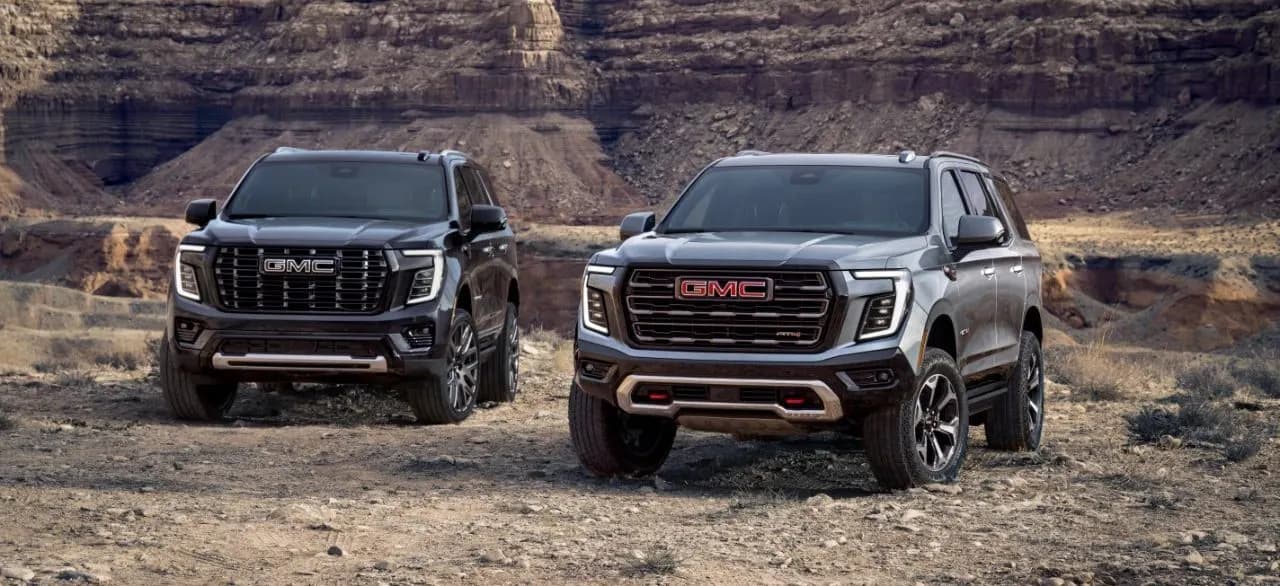
Updated 2025 GMC Yukon Unveils Advanced Towing Technology
The refreshed 2025 GMC Yukon keeps its 8,400-lb max towing rating and adds Blind Zone Steering Assist, Transparent Trailer View and Jackknife Alert.
 GMC Brakes
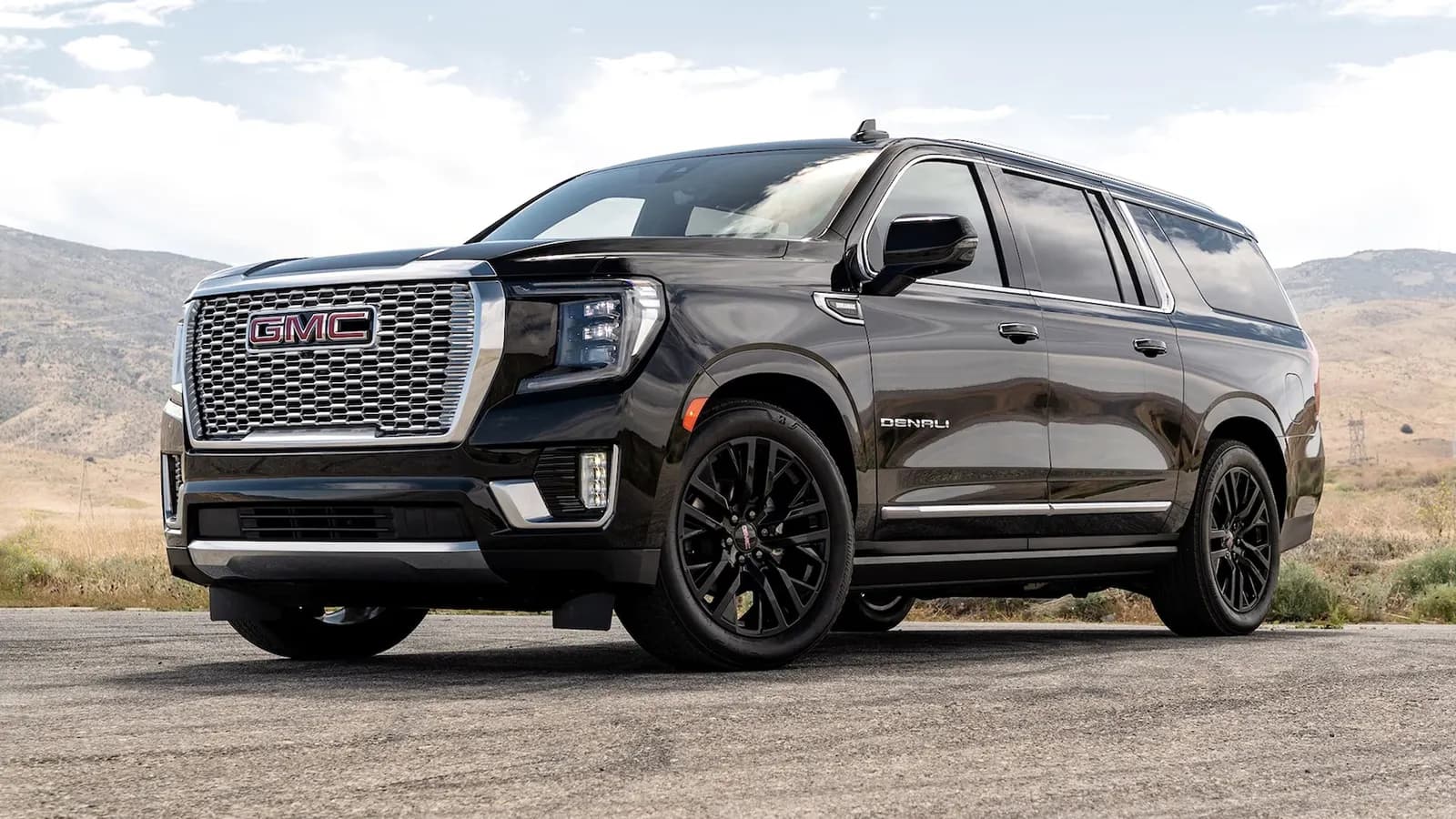
GM Releases Fix For 2024 GMC Yukon Battery Drain
Some 2024 GMC Yukons drain the battery after an over-the-air update. GM's fix reprograms the serial data gateway module at no cost to owners.
 GMC Brakes
2024 GMC Canyon Recall: Fuel Tank Lock Ring Fire Risk
General Motors, announced a voluntary Safety Recall for specific models of the eagerly awaited 2024 GMC Canyon and Chevy Colorado trucks.
 GMC Brakes
2007 GMC Yukon Denali 6.2 Oil Pressure Problems
The 2007 GMC Yukon Denali is known for sometimes developing low oil pressure problems with its 6.2L V8 engine. Here is how to fix it in 2024.
 GMC Brakes
GMC Canyon Pickups Recalled Over Tight Nuts
So I was browsing the latest auto news and came across an article about some GMC Canyon pickups being recalled.
More in GMC Ownership Guides
- How to Remote Start GMC Truck
- 2020 Silverado 1500 Air Lift System
- How to Open GMC Acadia Trunk From Inside
- GMC Acadia Towing Capacity
- Does The GMC Acadia Have Engine Problems?
- GMC Acadia Airbag Inflator Recall is Happening
- How To Start GMC Acadia With Key Fob
- Where is The GMC Acadia Battery Location?
- 2009 GMC Sierra RPMs Drop When Shifting Into Gear
- 2024 GMC Sierra EV Recall: Dim Turn Signals Pose Safety Risk
- GMC Sierra 2.7L Turbo Fuel Injector Fix: GM Service Update
- GMC Truck Settlement: $35M for Faulty Fuel Injection Pumps