Why Won't My GMC Sierra's Brake Warning Light Turn Off?
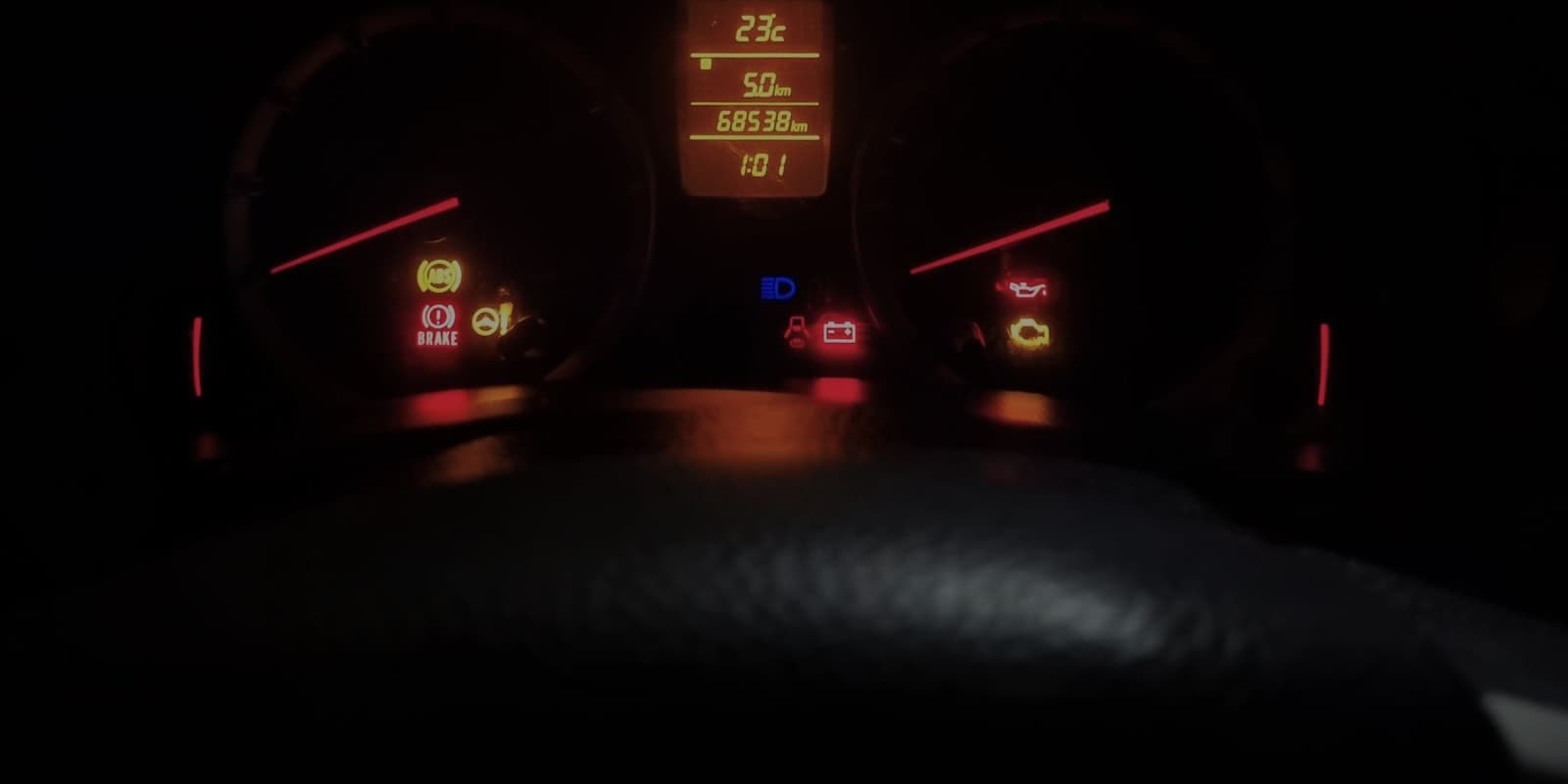
When a Sierra's brake warning light stays on despite pads that measure fine and fluid that's topped up to the correct level, the most likely culprits are a parking brake switch that isn't fully releasing, a brake fluid level sensor that's sticking or failing, an ABS module fault, or a wiring problem somewhere in the brake warning circuit. Less commonly, the fluid level really is low in a spot the dipstick or a quick glance doesn't catch, such as after a slow leak. Because several of these causes overlap with the ABS system and share sensors with other warning lights, working through them in order is usually faster than guessing at parts.
Most Likely Causes
Parking Brake Switch Not Fully Releasing
The parking brake switch tells the dashboard whether the parking brake is engaged. If the switch is misadjusted, corroded, or has worn contacts, it can keep sending an "applied" signal even after the parking brake is fully released. This is one of the most commonly reported reasons a brake warning light stays on when nothing else seems wrong. Cleaning the switch contacts or adjusting its position resolves many cases; a switch that's physically damaged usually needs replacement. If the parking brake cable itself is sticking or partially frozen (more common in cold climates or on trucks that sit for long periods), that can produce the same symptom even with a good switch.
Brake Fluid Level Sensor Issues
The fluid reservoir uses a float-type sensor that rises and falls with the fluid level. Brake fluid absorbs moisture over time and can become slightly corrosive, which can affect the float mechanism or the sensor's electrical contacts. A sensor that's sticking, corroded, or otherwise failing can trigger the warning light even when the fluid level in the reservoir is genuinely fine. This is a case where the light is telling the truth about a sensor problem, not lying about the brakes.
ABS Module or Wheel Speed Sensor Fault
On many GM trucks, the brake warning system and the ABS system share circuitry, so a fault in the ABS module or a wheel speed sensor can illuminate the brake light along with (or sometimes instead of) the ABS light. If you're seeing both a brake warning and an ABS indicator together, that combination points toward the ABS side of the system rather than the hydraulic brakes themselves. Our ABS system overview covers how these components interact in more detail.
Wiring or Body Control Module Problems
A short, a loose connector, or corrosion anywhere in the brake warning circuit can keep the light on independent of what's actually happening at the brakes. Some owners have traced persistent warning lights back to the Body Control Module rather than any brake component at all. These faults are harder to diagnose without a scan tool, since the light alone doesn't reveal whether the problem is mechanical, sensor-related, or electrical.
Genuinely Low Fluid You Haven't Caught Yet
Double-check the fluid level carefully and look for a slow leak at a wheel cylinder, caliper, or brake line before ruling this out. A level that looked fine a few days ago can drop if there's a small leak in the system. If the reservoir sits at or near the "MIN" line, top it off and watch whether the light clears and whether the level drops again over the following days.
Is It Safe to Keep Driving?
Whether it's safe to keep driving depends on what else is happening, not just on the light itself. A brake warning light with a firm pedal, no unusual noises, and no other dashboard warnings is more likely to be a switch or sensor issue than an immediate hydraulic emergency. That said, treat it as urgent rather than routine if any of the following are also present:
- A soft, spongy, or unusually low-feeling brake pedal
- Grinding or metal-on-metal noise when braking
- The truck pulling to one side under braking
- A noticeably longer stopping distance than normal
- The light paired with an ABS or StabiliTrak warning
If none of those apply, it's reasonable to get the vehicle checked in the near term rather than immediately, but the light shouldn't be ignored indefinitely. If you're unsure whether your specific warning matches this scenario, the brake warning light and message chart can help confirm what you're actually looking at.
How to Fix It
- Confirm the parking brake is fully released. Set it, then release it fully and watch whether the light responds. If it doesn't clear, the switch or cable is a likely next step.
- Recheck the fluid level and look for leaks. Check the reservoir on level ground, and inspect around the calipers, wheel cylinders, and brake lines for wetness or drips.
- Note any other lights on the dashboard. An ABS or StabiliTrak light alongside the brake warning points the diagnosis toward the ABS module or a wheel speed sensor rather than the hydraulic brakes.
- Have the system scanned for codes. A scan tool reading stored trouble codes from the brake and ABS modules is the most reliable way to tell a switch problem from a sensor problem from a wiring problem, and it's a step most owners can't do at home without a scanner.
- Have the parking brake switch and fluid level sensor inspected if codes point that way. These are the two most commonly reported causes when pads and fluid both check out normal, and neither typically requires a major repair once identified.
- Get a professional inspection if the cause isn't obvious. Wiring and Body Control Module issues are hard to chase down without the right equipment, and a light that returns after a reset means the underlying fault wasn't actually fixed.
If a recent brake pad service is part of the picture, also check whether the brake pad monitor needs to be reset, since a monitor that wasn't reset after new pads can trigger a warning unrelated to sensor or switch failure. And if the issue turns out to be the brake light switch itself rather than the dashboard warning light, the brake light switch replacement guide covers that separate but related component.
Frequently Asked Questions
Can a bad brake fluid sensor cause a false warning light?
Yes. The float-type sensor in the fluid reservoir can stick or corrode over time, which can trigger the warning light even when the actual fluid level is within the normal range. This is one of the more common explanations when a driver has confirmed the fluid looks fine but the light won't clear.
Why would the brake light and ABS light come on together?
The brake warning system and ABS system share sensors and circuitry on many GM trucks, so a fault in the ABS module or a wheel speed sensor can trigger both lights at once, or trigger the brake light on its own. Seeing both lights together generally points diagnosis toward the ABS side of the system rather than the hydraulic brake components.
Will resetting the warning light fix the underlying problem?
Not by itself. Clearing the light removes the visible warning, but if the underlying cause (a stuck switch, a failing sensor, a wiring fault) hasn't been addressed, the light is likely to come back. A scan tool reading stored codes is the most reliable way to confirm the actual cause before considering it resolved.
Is the parking brake switch expensive to fix?
Parking brake switch problems are often resolved by cleaning corroded contacts or adjusting the switch's position, which isn't a costly fix. A damaged switch that needs full replacement is still a relatively minor component compared to major brake repairs, though actual parts and labor costs vary by shop and model year.
Safety note: This guide is for general informational purposes. Brake systems are safety-critical — if you're unsure at any step, or the work requires specialized tools, have it inspected or completed by a qualified technician.
Related Guides
 Sierra
How to Bleed ABS Brakes on a GMC Sierra
Standard two-person bleeding can leave air trapped inside the ABS modulator itself, which is why some Sierras keep a soft pedal even after a textbook bleed. Here's when that happens and how a scan tool-driven ABS bleed clears it.
 Sierra
GMC Sierra Soft Brake Pedal — Causes and What to Check
A soft or spongy brake pedal on a GMC Sierra usually points to air in the brake lines, a fluid leak, or a wearing master cylinder, roughly in that order of likelihood. Here's how to narrow it down and decide how urgently it needs attention.
 Sierra
GMC Sierra Parking Brake Reset After a Battery Disconnect
A GMC Sierra's electronic parking brake can lose its calibration reference and get stuck showing a service warning after the battery is disconnected or goes dead, since the parking brake control module needs stable power to know where the calipers actually are. Reconnecting the battery solidly and cycling the ignition clears it in many cases, though some trucks need the EPB switch sequence or a scan tool to finish the job.